How Multi-Touch Attribution Improves Marketing ROI Accuracy
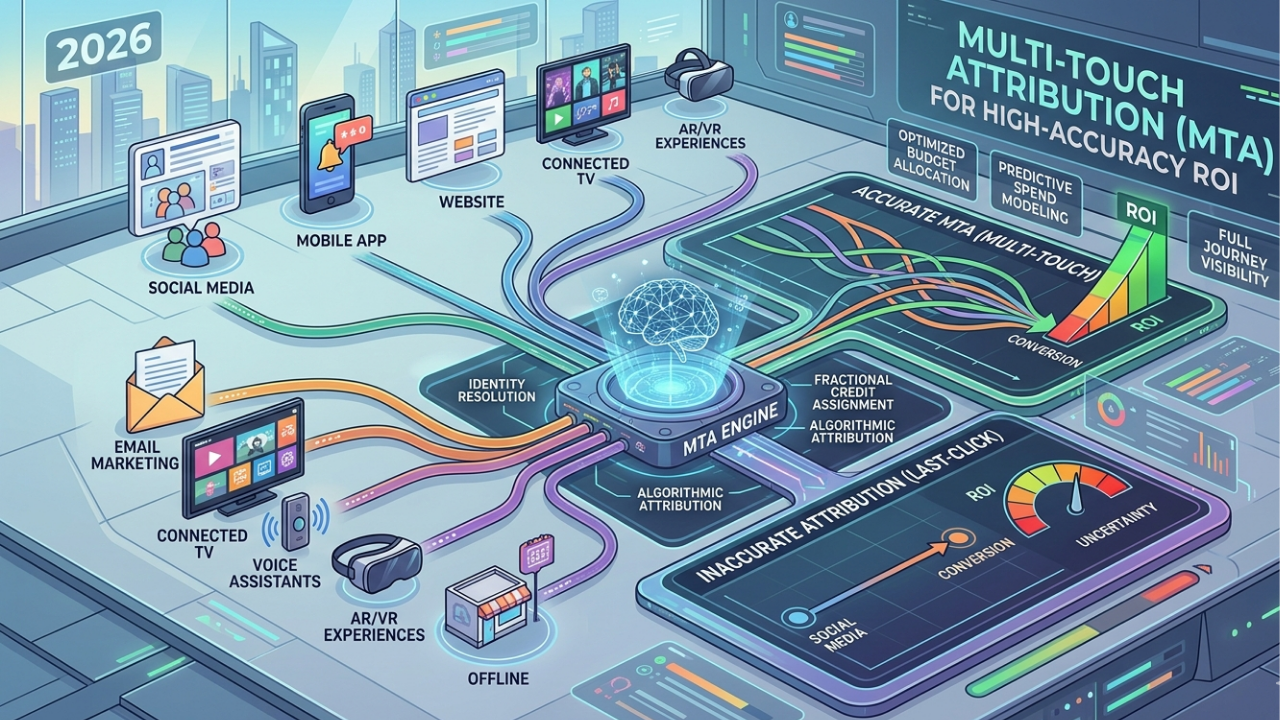
In today’s complex digital landscape, customers rarely convert after a single interaction. Instead, they engage with multiple touchpoints—searching on Google, clicking ads, reading blogs, and exploring websites—before making a decision.
That’s why relying on outdated, single-touch attribution models no longer delivers an accurate picture of performance. To truly understand what’s driving results, businesses need multi-touch attribution—a smarter, more complete way to measure marketing ROI.
For brands working with modern growth partners like Leapfrog Digital, adopting advanced attribution models is no longer optional—it’s essential for scaling effectively.
What Is Multi-Touch Attribution?
Multi-touch attribution (MTA) is a method of tracking and assigning value to every interaction a user has with your brand before converting.
Instead of giving all the credit to the first or last touchpoint, MTA distributes value across multiple channels—such as:
Organic search (SEO)
Paid ads (PPC campaigns)
Social media marketing
Website visits and content engagement
This approach aligns closely with modern strategies discussed in marketing intelligence platforms, where data is transformed into actionable insights.
Why Single-Touch Models Fall Short
Traditional attribution models—like first-click or last-click—oversimplify the customer journey.
For example:
A user may discover your brand through a blog (SEO)
Later click a retargeting ad (PPC)
Finally convert after visiting your website directly
A last-click model would credit only the final step, ignoring the earlier touchpoints that played a critical role in the decision.
This leads to:
Misallocated marketing budgets
Underestimated channel performance
Incomplete data insights
As highlighted in data-driven brand strategy execution, relying on incomplete data can significantly limit growth potential.
How Multi-Touch Attribution Improves ROI Accuracy
1. Provides a Holistic View of the Customer Journey
MTA allows businesses to see the full path to conversion, not just isolated interactions.
By understanding how different channels contribute at each stage—awareness, consideration, and conversion—brands can create more effective strategies. This approach complements insights from customer journey mapping.
2. Optimizes Budget Allocation
When you know which channels contribute most to conversions, you can allocate your budget more effectively.
For example:
Increase investment in high-performing PPC campaigns
Strengthen SEO efforts that drive early-stage traffic
Refine social media strategies that support engagement
Businesses leveraging strategies like performance marketing ROI optimization often see significantly improved returns through better allocation.
3. Enhances Campaign Performance
Multi-touch attribution helps identify which campaigns work best together.
Instead of evaluating channels in isolation, businesses can:
Optimize cross-channel strategies
Improve messaging consistency
Align campaigns with user intent
This aligns with modern approaches such as full-funnel marketing strategies, where every stage of the funnel is interconnected.
4. Supports Data-Driven Decision Making
Accurate data is the foundation of successful marketing.
MTA provides deeper insights into:
User behavior
Conversion paths
Channel interactions
When combined with tools and frameworks outlined in Google Analytics 4 for marketers, businesses can make smarter, faster decisions.
Integrating Multi-Touch Attribution Into Your Strategy
To get the most out of multi-touch attribution, it should be integrated into your overall digital marketing framework.
This includes aligning MTA with:
SEO strategies to track organic engagement
PPC campaign management to measure paid performance
Website analytics to understand user behavior
Content marketing to evaluate engagement
Organizations offering comprehensive digital marketing services often integrate attribution models across all these channels to ensure consistency and accuracy.
You can also explore more insights through the latest marketing blogs and resources to stay ahead of evolving trends.
The Role of Analytics and Reporting
Effective multi-touch attribution relies on robust analytics and reporting systems.
By continuously tracking performance, businesses can:
Identify trends and patterns
Adjust campaigns in real time
Improve conversion rates
Advanced strategies like predictive lead scoring further enhance attribution by identifying high-value prospects earlier in the journey.
Challenges to Consider
While multi-touch attribution offers significant benefits, it also requires careful implementation.
Common challenges include:
Managing complex data across multiple channels
Choosing the right attribution model
Ensuring accurate tracking and integration
Working with experienced teams—like those you can learn more about on the about page—can help overcome these barriers efficiently.
The Future of Marketing Measurement
As customer journeys become more complex, the importance of accurate attribution will only grow.
Businesses that adopt multi-touch attribution will be better equipped to:
Understand their audience
Optimize their marketing efforts
Maximize ROI
Innovations such as AI-powered customer segmentation are already pushing attribution into a more predictive and intelligent future.
Final Thoughts
Multi-touch attribution is a game-changer for businesses looking to improve marketing ROI accuracy.
By providing a complete view of the customer journey, optimizing budget allocation, and enabling data-driven decisions, it transforms how marketing performance is measured and improved.
For brands focused on growth, MTA isn’t just an advanced tactic—it’s an essential part of a modern, effective digital marketing strategy.
If you’re ready to refine your marketing performance and unlock deeper insights, it might be time to get in touch with experts who can help you implement a scalable attribution framework.